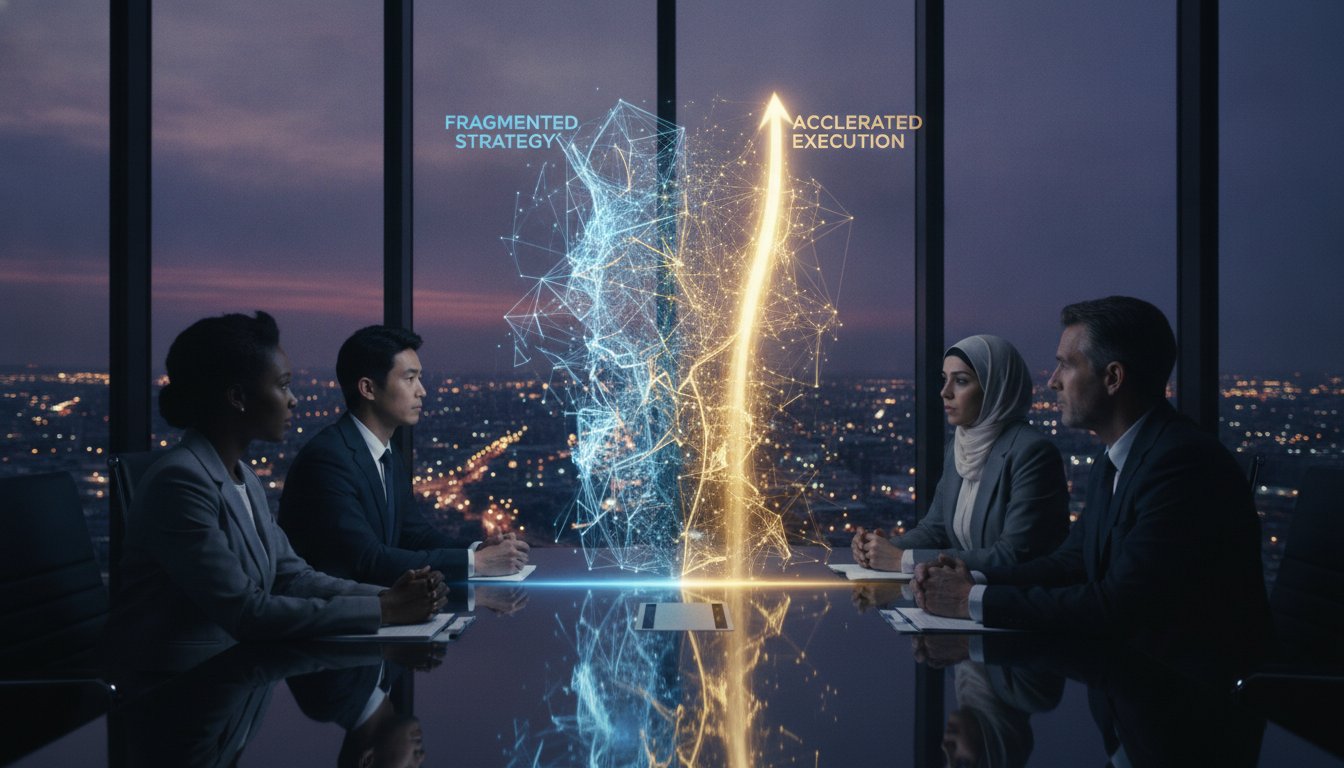
The strategy-execution gap is not a failure of leadership vision; it is a structural fracture in your organization's architectural integrity. In an era where continuous employee listening has replaced the stagnant annual survey, many executives still struggle to identify burnout risks until the talent has already departed. Most leaders realize that competitive pay scales cannot compensate for the friction caused by siloed departments working toward discordant objectives. To bridge this divide, elite firms are increasingly turning to sophisticated organizational alignment assessment tools that provide real-time visibility into the intersection of human behavior and systemic performance.
You've likely felt the weight of high-stakes urgency as performance metrics fluctuate despite clear directives. We're here to provide the master architectural framework for synchronizing workforce purpose with enterprise strategy through our comprehensive 2026 alignment audit checklist. This systematic approach allows you to secure a clear diagnostic of mission-critical gaps, fostering increased operational resilience and measurable workforce velocity. We'll examine the shift toward AI-powered insights and the specific methodologies required to transform abstract corporate values into disciplined, results-driven action.
Key Takeaways
- Identify the "Alignment Gap" to eliminate the invisible friction between executive vision and frontline execution that compromises organizational velocity.
- Apply a two-pillar architectural framework to ensure vertical synchronization with your North Star and horizontal synergy across complex departmental dependencies.
- Transition from static, fatigue-heavy surveys to advanced organizational alignment assessment tools that provide real-time, predictive, and privacy-compliant intelligence.
- Utilize a 12-point executive checklist to audit structural integrity, focusing on KPI cascading, resource allocation, and silo-busting feedback loops.
- Leverage a three-phase strategic integration methodology to synchronize individual workforce purpose with global enterprise strategy for measurable operational resilience.
Beyond the Strategy Map: Why Alignment Audits are Mission-Critical in 2026
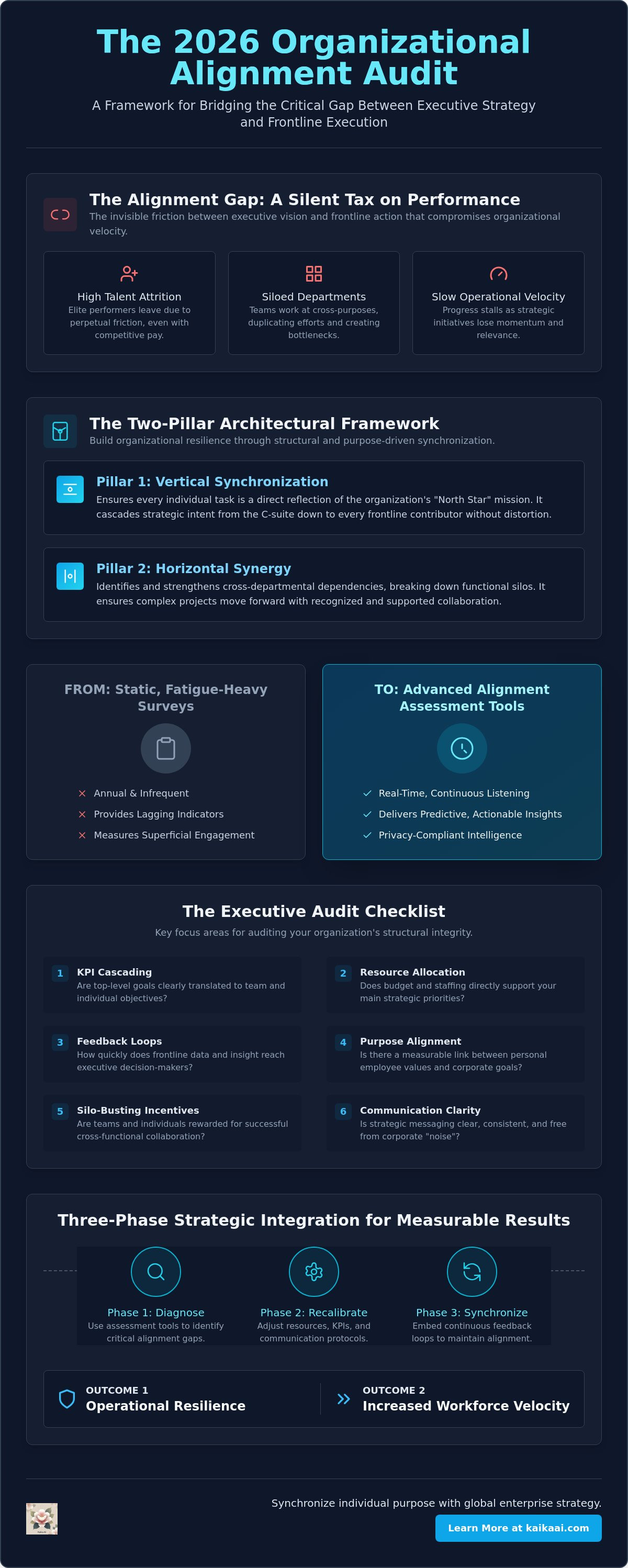
The strategy map on your boardroom wall is merely a representation of intent. It is not the lived reality of your operation. The "Alignment Gap" represents the invisible friction between executive vision and frontline execution, acting as a silent tax on every strategic initiative you launch. When your workforce is out of sync, your enterprise experiences a structural failure that no amount of capital can bridge. This gap isn't just a management inconvenience; it's a mission-critical failure of enterprise architecture that erodes the very foundation of performance.
Misalignment manifests in measurable decay. High talent attrition occurs even when compensation remains competitive because elite performers refuse to operate in environments of perpetual friction. Siloed departments begin working at cross-purposes, and operational velocity slows to a crawl. Modern leaders require advanced organizational alignment assessment tools to diagnose these structural vulnerabilities before they manifest as fiscal deficits. Identifying these points of resistance allows for a strategic recalibration that restores the flow of information and purpose across the entire organization.
In 2026, the necessity for "Dynamic Alignment" has reached a critical threshold. Global workforce volatility and the rapid integration of AI have rendered static, annual planning cycles obsolete. The Mission-Critical Alignment Audit serves as a vital diagnostic tool for operational resilience, ensuring that your organization remains a cohesive, high-performance engine regardless of external market shocks. It provides the clarity needed to pivot without fracturing the cultural core of the business, allowing for a seamless transition between strategic intent and operational reality.
Maintaining this operational resilience also requires radical transparency during technical challenges; solutions like StatusPulse provide the public status pages and uptime monitoring necessary to keep both internal teams and external stakeholders aligned when systems face disruptions.
The Erosion of Traditional Strategic Cascading
Top-down goal setting often fails in decentralized, global organizations because it ignores the complexities of the modern labor landscape. The "Signal-to-Noise" problem in corporate communication means that by the time a strategy reaches the frontline, it's often distorted or irrelevant. Workforce velocity is the speed at which an organization moves toward its primary mission. Without a systematic way to audit this movement, leadership remains blind to the drag created by misinformed execution and fragmented priorities.
Alignment as a Predictor of Operational Resilience
Synchronized teams absorb market shocks with far greater efficiency than siloed ones. When every individual understands their role within the broader Strategic alignment framework, the organization gains a form of collective psychological stamina. We must move beyond "Engagement," which is often a superficial metric, toward "Synchronization" as our primary key performance indicator. This shift ensures that your structural integrity remains uncompromised during periods of rapid evolution or high-stakes pressure. It's about building a system that doesn't just survive change but thrives on the precision of its response.
The Architectural Audit: Assessing Structural and Purpose-Driven Sync
A resilient organization is built on structural integrity, not just strategic intent. To achieve true enterprise synchronization, leadership must move beyond the superficiality of annual reviews and employ comprehensive organizational alignment assessment tools. This architectural audit evaluates four distinct pillars that define the health and velocity of the system. First, Vertical Synchronisation ensures every individual task is a direct reflection of the North Star mission. Second, Horizontal Synergy identifies whether cross-departmental dependencies are recognized or ignored. Third, Purpose Alignment measures the link between personal values and corporate goals. Finally, Feedback Velocity tracks how rapidly frontline data reaches executive dashboards to inform high-stakes decisions.
Integrating the 3 Keys To Organizational Alignment into this diagnostic framework highlights a critical truth: alignment is a dynamic state of being. It requires constant recalibration to prevent the erosion of performance. When these pillars are out of balance, the resulting friction manifests as lost revenue and talent churn. Identifying these structural vulnerabilities is the first step toward building a more robust, mission-oriented enterprise. For those ready to move from diagnostic to action, conducting a professional Alignment Audit provides the precise data needed to begin the synchronization process.
Measuring Individual-to-Mission Correlation
Traditional metrics often fail because they treat employee engagement as a primary goal. In reality, engagement is a lagging indicator. Purpose Alignment is the true predictor of performance. We must utilize tools that identify "Purpose Gaps" within high-performance teams. AI now plays a vital role in mapping individual career trajectories to corporate growth, ensuring that personal ambition fuels enterprise success rather than conflicting with it. When a worker's personal "why" aligns with the company's "how," the result is a measurable surge in workforce velocity. It's about ensuring the individual's growth isn't just parallel to the company's, but integrated within it.
Identifying Cross-Departmental Friction Points
Horizontal synergy is often the first casualty of rapid growth. A "Silo Audit" is necessary to spot redundant work and conflicting objectives that drain resources. We apply Kaizen principles to structural alignment, treating every departmental handoff as a process that can be optimized for precision. By leveraging modern organizational alignment assessment tools, executives can visualize these dependencies in real-time and expose the hidden bottlenecks that slow down execution. This systematic approach ensures that the organization moves as a single, cohesive unit rather than a collection of fragmented parts working at cross-purposes. We don't just want cooperation; we want architectural synchronization.
Intelligence Over Surveys: Evaluating Your Organizational Alignment Assessment Tools
Static assessments are architectural ghosts. They represent a frozen moment in time, offering a post-mortem of organizational sentiment rather than a live diagnostic of operational health. The "Survey Fatigue" trap occurs when leadership relies on annual or quarterly data that is already obsolete by the time it reaches the executive suite. In 2026, the threshold for effective organizational alignment assessment tools has shifted from retrospective reporting to predictive intelligence. These tools must be real-time, predictive, and uncompromisingly privacy-compliant to serve as a reliable foundation for high-stakes decision-making.
Burnout prediction is no longer an ancillary HR function; it is a mission-critical component of the alignment audit. When an individual's output remains high but their synchronization with the corporate mission begins to fray, the risk of structural failure increases. Traditional HRIS analytics often miss these subtle shifts because they focus on lagging indicators like turnover rates or completed tasks. Modern workforce intelligence uses sophisticated patterns to detect mission drift before it manifests as a resignation letter, allowing leadership to intervene with strategic precision rather than reactive panic.
The Shift from Lagging to Leading Indicators
AI-driven intelligence identifies burnout patterns long before they impact the bottom line. By analyzing the flow of communication and task completion rates within hybrid work environments, these platforms provide a window into the collective psychological stamina of the organization. Evaluating data-driven Kaizen platforms allows for continuous improvement, turning every operational friction point into an opportunity for structural refinement. This transition from "what happened" to "what is emerging" is what defines an organization's ability to maintain high velocity in volatile markets.
Security and Privacy Standards in Workforce Analytics
Enterprise-grade security is the bedrock of trust in workforce intelligence. As organizations deploy more advanced organizational alignment assessment tools, navigating complex regulatory landscapes becomes a primary executive responsibility. Compliance with Japanese privacy standards and global SOC2 requirements is non-negotiable for any platform handling sensitive human capital data. To ensure your systems meet these rigorous benchmarks, you can learn more about International Associates Limited. Transparent leadership depends on the ethical application of AI, ensuring that data is used to empower the workforce rather than just monitor it. Building this trust ensures that employees remain active participants in the organization's evolutionary journey, fostering a culture of harmony and shared purpose.
The Executive Execution Checklist: 12 Points of Strategic Integration
Execution is the ultimate differentiator between stagnant enterprises and high-velocity organizations. While theoretical alignment provides a conceptual map, strategic integration requires a disciplined, architectural approach to implementation. To move beyond diagnostic insights, leadership must adhere to a systematic checklist that bridges the gap between high-level intent and operational reality. Utilizing the right organizational alignment assessment tools is the first step in this journey, but the subsequent points of integration determine the long-term structural integrity of the firm.
The following 12-point checklist serves as a master framework for executive leadership:
- Strategic Foundation: 1. Radical Mission Clarity; 2. Precision KPI Cascading; 3. Leadership Growth Mindset.
- Structural Integrity: 4. Strategic Resource Allocation; 5. Cross-functional Silo-Busting; 6. High-Velocity Feedback Loops.
- Human Intelligence: 7. Individual-to-Enterprise Purpose Mapping; 8. Predictive Burnout Monitoring; 9. Operational Resilience Training.
- Technological Enablement: 10. Seamless Tool Integration; 11. Real-time Intelligence Dashboards; 12. AI-driven Collective Kaizen.
This checklist isn't a static list of tasks; it's a dynamic roadmap for evolution. Each point represents a critical node in the organizational nervous system that must be synchronized to achieve peak performance. For executives ready to initiate this transformation, the most effective starting point is a professional Alignment Audit to establish your baseline and identify hidden friction points.
Phase 1: The Architectural Consultation
The first phase involves conducting an initial audit to identify mission-critical gaps that impede workforce velocity. By defining a specific "Alignment Score," leadership gains an objective metric to track progress. This architectural consultation establishes the executive-level framework for synchronization, ensuring that every department understands its role in the broader enterprise mission. It's about creating a transparent diagnostic of the current state before attempting to build the future.
Phase 2: Strategic Integration of Intelligence
Once the foundation is set, organizations must deploy organizational alignment assessment tools and AI-powered platforms across all divisions. This phase focuses on training leadership to move from intuitive management to data-driven decision-making. By synchronizing individual purpose with departmental outcomes, the organization ensures that human potential is maximized. This integration creates a seamless flow of intelligence from the frontline to the executive suite, allowing for rapid strategic recalibration.
Phase 3: Collective Kaizen and Continuous Evolution
The final phase moves toward a state of perpetual refinement through iterative workshops and real-time monitoring. By analyzing live workforce velocity data, leadership can adjust strategy with surgical precision. This phase emphasizes early burnout detection and the continuous refinement of synergy across the organization. It transforms the business into a living organism that doesn't just react to change but actively evolves through collective intelligence and disciplined execution.
Kaika AI: Synchronising Individual Purpose with Global Enterprise Strategy
The realization of architectural harmony within a global enterprise requires more than just a checklist; it demands a digital nervous system capable of real-time recalibration. The Kaika AI Workforce Alignment Intelligence Platform represents the pinnacle of this evolution. While previous sections detailed the necessity of auditing and the criteria for selection, Kaika AI provides the actual framework for execution. It's a tool designed for the visionary leader who recognizes that workforce velocity is the only sustainable competitive advantage in a volatile market. By moving beyond the limitations of traditional organizational alignment assessment tools, we offer a pathway to true structural synchronization.
Our three-phase strategic integration methodology directly addresses the mission-critical gaps identified in your initial audit. We move from a high-level Executive Consultation to the deployment of predictive analytics, ensuring that every operational node is synchronized. This isn't a passive monitoring system. It's a proactive engine for operational resilience that utilizes advanced intelligence to map the intersection of human behavior and strategic output. As of July 2026, the platform is in a Limited Early Access phase, providing select partners with the precision required to lead in an increasingly complex global landscape.
The Kaika AI Difference: Real-Time Human Intelligence
At the core of our platform is the ability to connect individual employee purpose with organizational KPIs. This synchronization reduces attrition by identifying burnout risk long before it impacts productivity. We utilize a blend of systems engineering and organizational psychology to provide a clear view of your organization's health. Security is foundational. Our platform maintains strict adherence to Japanese privacy standards and SOC2 compliance, ensuring that your enterprise data remains as secure as it is actionable. By prioritizing leading indicators over lagging surveys, we empower leadership to intervene with surgical precision.
Starting Your Alignment Journey
Evolution begins with an objective assessment of your current structural integrity. We invite you to book an Executive Consultation to measure your existing workforce velocity and identify latent friction points. For leadership teams seeking to foster high-stakes synergy, our Collective Kaizen Workshops provide a disciplined environment for strategic refinement. These sessions allow your team to master the architectural framework necessary for long-term resilience. The future of global enterprise belongs to those who can synchronize purpose with precision. We invite you to join the vanguard of aligned leadership and secure your organization's trajectory.
Request Early Access to Kaika AI
Mastering the Architecture of Strategic Velocity
The transition from static strategic maps to dynamic, real-time synchronization is the defining challenge for the modern executive. We've established that identifying the "Alignment Gap" and executing a disciplined 12-point integration checklist transforms abstract vision into measurable operational output. By prioritizing synchronization over mere engagement, you ensure your organization possesses the structural integrity to absorb market shocks while maintaining peak workforce velocity. This evolution isn't just a management preference; it's a mission-critical requirement for resilience.
Achieving this state of flow requires the precision of advanced organizational alignment assessment tools that move beyond retrospective surveys. Our three-phase strategic integration methodology provides a clear path toward this evolution, utilizing AI-powered burnout prediction while maintaining full compliance with Japanese privacy standards. The intersection of human potential and enterprise strategy is where true excellence resides. It's time to secure your position at the vanguard of global leadership. Request Early Access to the Kaika AI Alignment Platform and begin the process of architectural recalibration today. Your organization's future is a function of its alignment; don't leave its velocity to chance.
Strategic Synchronization: Frequently Asked Questions
What is a mission-critical alignment audit?
A mission-critical alignment audit is a comprehensive architectural diagnostic designed to expose the invisible friction between executive intent and frontline output. Unlike surface-level reviews, this process evaluates the structural integrity of your organization's mission-cascading mechanisms. It ensures every operational node is synchronized with the North Star, allowing leadership to identify and repair the fractures that compromise performance and workforce velocity.
How do organizational alignment assessment tools differ from standard HR surveys?
Modern organizational alignment assessment tools provide real-time, predictive intelligence rather than the lagging, retrospective data found in traditional HR surveys. While standard surveys capture a frozen moment of employee sentiment, these advanced platforms analyze the dynamic velocity of the workforce. They offer a live dashboard of synchronization and structural health, enabling proactive adjustments rather than post-mortem reactions to cultural decay.
Can AI really predict employee burnout and attrition?
AI identifies burnout by detecting subtle shifts in communication patterns and productivity metrics before they manifest as talent attrition. By monitoring the intersection of individual purpose and enterprise output, the system flags mission-drift and psychological exhaustion. This allows leadership to intervene with strategic precision. It transforms human capital management from a reactive function into a predictive, results-driven discipline focused on long-term resilience.
What are the key metrics for measuring workforce velocity?
Workforce velocity is measured by the speed at which an organization moves toward its primary mission, adjusted for horizontal friction and vertical synchronization. Key indicators include the rate of cross-departmental dependency resolution and the degree of correlation between individual tasks and high-level strategic KPIs. These metrics provide an objective view of how efficiently human potential is being converted into enterprise-level strategic progress.
How does Kaika AI ensure data privacy while monitoring alignment?
We maintain uncompromising security by adhering to Japanese privacy standards and SOC2 compliance protocols. The platform is engineered to provide high-level strategic insights while protecting individual anonymity, ensuring that data-driven leadership remains a tool for empowerment rather than intrusive surveillance. This transparent approach builds trust within the workforce, fostering a culture where data is used to harmonize rather than just monitor.
What is the ROI of implementing a workforce alignment platform?
The return on investment manifests as a significant reduction in talent churn and a measurable increase in operational resilience. By eliminating redundant work and resolving siloed objectives, organizations reclaim lost velocity and ensure that capital is always deployed toward high-impact strategic outcomes. It's about protecting your most valuable assets while ensuring that every individual's effort contributes directly to the bottom line.
How long does a full strategic integration of Kaika AI take?
Strategic integration follows a methodical three-phase methodology that begins with an initial Alignment Audit to identify mission-critical gaps. This is followed by the deployment of the intelligence platform and the establishment of Collective Kaizen Workshops to ensure continuous evolution. The timeline is designed to match the complexity of the enterprise, moving from diagnostic realization to structural refinement at a pace that ensures institutional reliability.
Is Kaika AI suitable for global organizations with diverse divisions?
Kaika AI is specifically architected for global enterprises managing complex, diverse divisions across multiple geographies. The platform's ability to audit horizontal synergy makes it an essential tool for identifying and resolving the friction points that naturally occur in large-scale operations. It provides a unified framework for synchronization that respects divisional nuances while ensuring the entire global entity moves with singular, disciplined intent.
Disclaimer
#Disclaimer
At Kaika AI, we believe the future belongs to organizations that combine human wisdom with artificial intelligence responsibly. The articles, research, insights, and thought leadership published on this website are intended to educate, inform, and encourage meaningful conversations about the future of work, organizational intelligence, AI, leadership, and innovation.
While our content is developed through rigorous research and may be generated, curated, or enhanced using artificial intelligence, every effort is made to ensure it reflects thoughtful analysis, practical relevance, and responsible AI practices. However, no representation or warranty is made regarding the completeness, accuracy, or suitability of the information for every individual or organizational circumstance.
The ideas, opinions, frameworks, and recommendations shared by Kaika AI are provided for educational and informational purposes only. They should not be interpreted as legal, financial, medical, psychological, human resources, cybersecurity, or other professional advice. Organizations and individuals should seek qualified professional guidance before making strategic, legal, or operational decisions.
Where articles reference third-party organizations, products, services, academic research, industry reports, or public data, such references are provided solely to support discussion and analysis. Unless explicitly stated, they do not imply endorsement, partnership, or affiliation.
Artificial intelligence is a powerful decision-support technology—not a replacement for human judgment. Kaika AI advocates for responsible, transparent, and human-centered AI adoption. We encourage readers to critically evaluate information, consider their unique context, and combine AI-generated insights with professional expertise and sound decision-making.
The content published on this website may be updated, revised, or removed as knowledge, technology, regulations, and best practices continue to evolve.
To the fullest extent permitted by applicable law, Kaika AI, its affiliates, contributors, and partners disclaim liability for any direct, indirect, incidental, consequential, or other losses arising from the use of, or reliance upon, the information provided on this website.
By accessing or using this website, you acknowledge that you have read, understood, and agree to this Disclaimer.
Kaika AI
'Building trusted organizational intelligence for the AI Era'


